SPECTRAL RELATIONSHIP BETWEEN OCEAN WAVES AND MICROSEISMIC NOISE: A DYADIC ANALYSIS USING TE-GRAM
DOI:
https://doi.org/10.18867/ris.115.724Keywords:
Te-gram, Earth's noise, primary-microseism, secondary-microseismAbstract
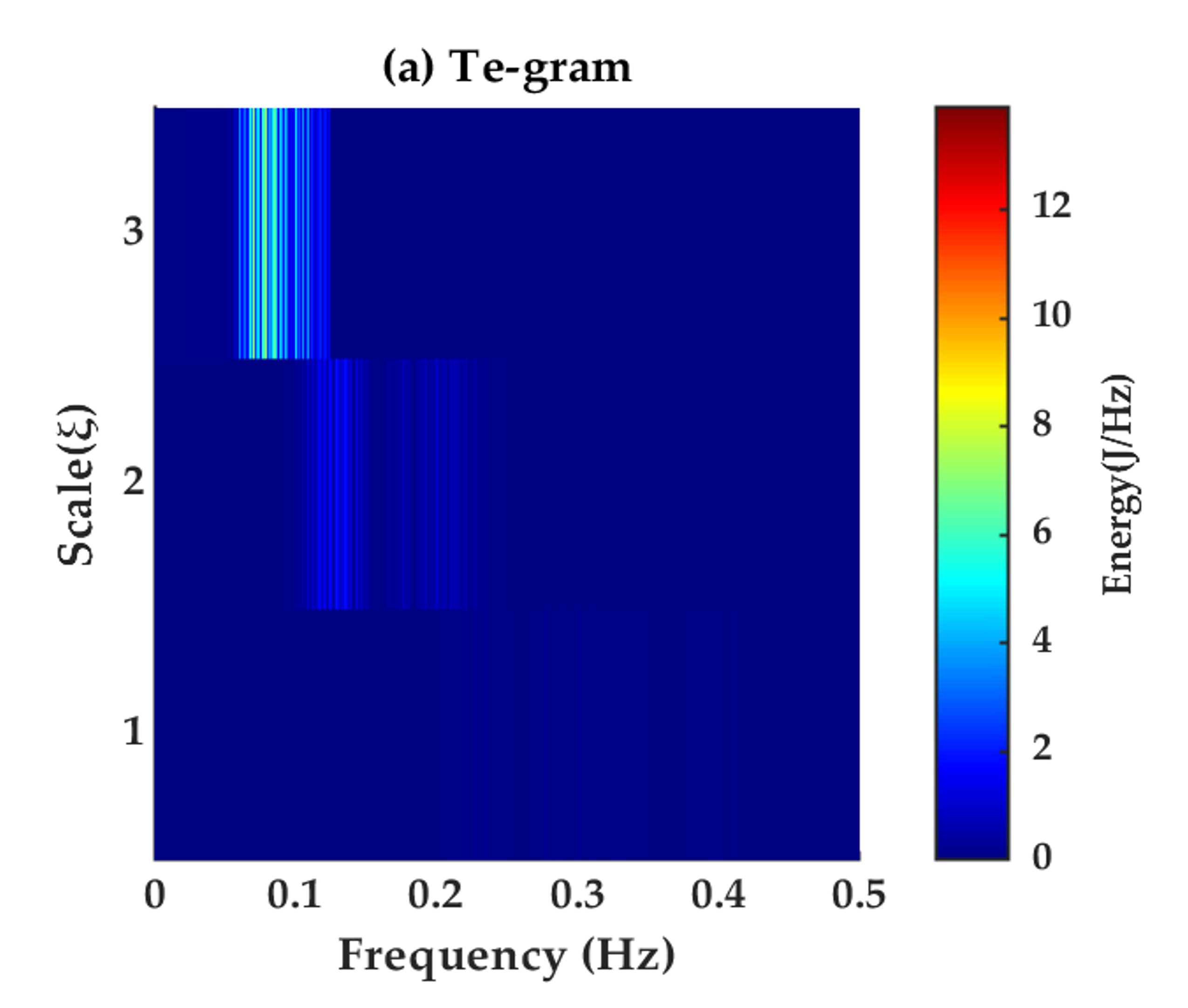
Understanding the coupling mechanisms between ocean dynamics and ambient seismic noise remains a fundamental challenge in Earth system science. This study introduces a high-resolution spectral analysis between seismic signals and ocean waves using the Te-gram, a mathematical tool designed to overcome the limitations of classical time-frequency methods. Two local seismic events near Baja California, occurring on April 22, 2021 (Mw 3.8) and September 15, 2022 (Mw 4.1), were analyzed, along with wave acceleration data from CDIP station 155. The results reveal persistent energy peaks centered at 0.07 Hz in both marine and seismic records, consistently observed across multiple time windows. This frequency aligns with the primary microseism band and is indicative of direct seafloor interactions driven by long-period ocean swell. Comparative analysis with conventional spectral tools demonstrates the Te-gram superior ability to suppress cross-terms, resolve localized energy, and preserve nonstationary signal features. Control period comparisons further reinforce the hypothesis that enhanced wave energy in the microseismic band corresponds with increased seismic energy at the same frequency, suggesting continuous ocean–solid Earth energy transfer. These findings contribute to the geophysical understanding of how persistent oceanographic conditions can influence the lithosphere’s background oscillations.
Downloads
References
Ardhuin, F., Gualtieri, L. and Stutzmann, E. (2015) ‘How ocean waves rock the Earth: Two mechanisms explain microseisms with periods 3 to 300s’, Geophysical Research Letters, 42(3), pp. 765–772. Available at: https://doi.org/10.1002/2014GL062782.
Ardhuin, F., Stutzmann, E., Schimmel, M. and Mangeney A. (2011) ‘Ocean wave sources of seismic noise’, JOURNAL OF GEOPHYSICAL RESEARCH, 116(9), p. 21. Available at: https://doi.org/10.1029/2011JC006952.
Asten, M. (1978) ‘Geological control of the three-component spectra of Rayleigh-wave microseisms.’, Bulletin of the Seismological Society of America, 68, pp. 1623–1636.
Berger, J., Davis, P. and Ekström, G. (2004) ‘Ambient Earth noise: A survey of the Global Seismographic Network’, Journal of Geophysical Research: Solid Earth, 109(11), pp. 1–10. Available at: https://doi.org/10.1029/2004JB003408.
Bonnefoy-Claudet, S., Cotton, F. and Bard, P.Y. (2006) ‘The nature of noise wavefield and its applications for site effects studies. A literature review.’, Earth-Science Reviews, 79(3–4), pp. 205–227. Available at: https://doi.org/10.1016/j.earscirev.2006.07.004.
Buffoni, C. (2016) Determinación de la estructura cortical en el sector argentino de la Isla Grande de Tierra del Fuego. Available at: http://sedici.unlp.edu.ar/handle/10915/67907.
Castrillo, B.G. (2013) ANÁLISIS Y APLICACIONES DEL RUIDO SÍSMICO EN MÉXICO, GOLFO DE MÉXICO Y CARIBE : TOMOGRAFÍA DE ONDAS SUPERFICIALES RAYLEIGH Y LOVE.
Essen, H.-H., Klussmann, J., Herber R. and Grevemeyer I. (1999) ‘Does microseisms in Hamburg (Germany) reflect the wave climate in the North Atlantic?’, Deutsche Hydrographische Zeitschrift, 51(1), pp. 33–45. Available at: https://doi.org/10.1007/bf02763955.
Essen, H.-H. Krüger, F., Dahm, T., and Grevemeyer I. (2003) ‘On the generation of secondary microseisms observed in northern and central Europe.’, Journal of Geophysical Research, 108(B10), pp. 1–15. Available at: https://doi.org/10.1029/2002jb002338.
Flandrin, P. (1999) Time-Frequency/Time-Scale Analysis. Academic Press.
Friedrich, A., Krüger, F. and Klinge, K. (1998) ‘Ocean-generated microseismic noise located with the Gräfenberg array’, Journal of Seismology, 2(1), pp. 47–64. Available at: https://doi.org/10.1023/A:1009788904007.
Guevara, D.F. (2019) ‘Preprocesamiento de los Datos de las Unidades de Medición Sincrofasorial (PMUs) utilizando la técnica limpieza de datos-Aplicación al Sistema Nacional Interconectado Ecuatoriano’. Available at: http://bibdigital.epn.edu.ec/handle/15000/19927.
Haubrich, R. A., Munk, W. H., and Snodgrass, F. E. (1963) ‘Comparative spectra of microseisms and swell’, Bulletin of the Seismological Society of America, pp. 237–241. Available at: https://doi.org/10.1785/BSSA0530010027.
Hasselmann, K. (1963) A statistical analysis of the generation of microseisms., Institute of Geophysicsa nd Planetary Physics University o[ California, San Diego. Institute of Geophysicsa nd Planetary Physics University o[ California, San Diego. Available at: https://doi.org/10.1029/RG001i002p00177.
Hinde, B.J. and Gaunt, D.I. (1967) ‘Microseisms’, Contemporary Physics, 8(3), pp. 267–283. Available at: https://doi.org/10.1080/00107516708204387.
Kedar, S., Longuet-Higgins, M., Webb, F., Graham, N., Clayton, R. and Jones, C. (2008) ‘The origin of deep ocean microseisms in the North Atlantic Ocean’, Proceedings of the Royal Society A: Mathematical, Physical and Engineering Sciences, 464(2091), pp. 777–793. Available at: https://doi.org/10.1098/rspa.2007.0277.
Liu, X., Li, S., Liu, H., He, L., and Liu, T. (2024) ‘Infrared spectrum resolution enhancement model via Gabor transform regularization for object detection’, Infrared Physics & Technology, 141. Available at: https://doi.org/10.1016/j.infrared.2024.105441.
Longuet-Higgins, M.S. (1950) A theory of the origin of microseisms, Department of Geodesy and Geophysics, University of Cambridge. Available at: https://doi.org/10.2307/j.ctt211qv60.7.
Lunansky, M. (2019) Análisis del ruido sísmico mediante interferometría para el modelado cortical en la cuenca Chaco-Paraná. Universidad Nacional de La Plata, Argentina.
México SSN Servicio Sismológico Nacional (2024). Available at: http://www.ssn.unam.mx/.
Millman, Jacob; Taub, H. (1965) ‘Capitulo 11 - Multivibradores Monoestables y Astables’, in Pulse, Digital and Switching Waveforms.
Nishida, K., Kawakatsu, H., Fukao, Y. and Obara, K. (2008) ‘Background Love and Rayleigh waves simultaneously generated at the Pacific Ocean floors’, Geophysical Research Letters, 35(16), pp. 1–5. Available at: https://doi.org/10.1029/2008GL034753.
Quintana-Fuentes, D. (2024) Aplicación del te-gram al análisis del espectro de fugas de agua. Universidad Autónoma del Estado de Morelos.
Retailleau, L. and Gualtieri, L. (2021) ‘Multi-phase seismic source imprint of tropical cyclones’, Nature Communications, 12(1), pp. 1–8. Available at: https://doi.org/10.1038/s41467-021-22231-y.
Retailleau, L., Landès, M., Gualtieri, L., Shapiro, N.M., Campillo, M., Roux, P., and Guilbert, J. (2018) ‘Detection and analysis of a transient energy burst with beamforming of multiple teleseismic phases’, Geophysical Journal International, 212(1), pp. 14–24. Available at: https://doi.org/10.1093/gji/ggx410.
Schulte-Pelkum, V., Earle, P.S. and Vernon, F.L. (2004) ‘Strong directivity of ocean-generated seismic noise.’, Geochemistry, Geophysics, Geosystems, 5(3), pp. 1–13. Available at: https://doi.org/10.1029/2003GC000520.
Schweitzer, J. (1911) ‘Early German Contributions to Modern Seismology’, International Handbook of Earthquake and Engineering Seismology, edited by: Lee, W., Kanamori, H., Jennings, P., and Kisslinger, C., Elsevier, pp. 1–57.
Scozzese, F. and Dall’Asta, A. (2024) ‘Nonlinear Response Characterization of Post-Tensioned R . C . Bridges through Hilbert – Huang Transform Analysis’, Wiley [Preprint]. Available at: https://doi.org/10.1155/2024/5960162.
Seuret-Jiménez, D., Trutié-Carrero, E., Nieto-Jalil, J. M., García-Aquino, E. D., Díaz-González, L., Carballo-Sigler, L., Quintana-Fuentes, D., and Gaggero-Sager, L. M. (2023). Feature Extraction of a Non-Stationary Seismic–Acoustic Signal Using a High-Resolution Dyadic Spectrogram. Sensors, 23(13), 6051. https://doi.org/10.3390/s23136051 (2023) ‘Feature Extraction of a Non-Stationary Seismic–Acoustic Signal Using a High-Resolution Dyadic Spectrogram’, Sensors, 23(13). Available at: https://doi.org/10.3390/s23136051.
Sharma, A. (2024) ‘Steel truss bridge damage assessment using kurtosis, FFT, spectrogram and Wigner-Ville distribution techniques’. Available at: https://doi.org/10.1504/IJQET.2024.142217.
Shubladze, T.A. and Tsereteli, N.S. (2023) ‘Investigation of Ambient Seismic Noise in Different Region of Georgia’, Journals of Georgian Geophysical Society, 26(2), pp. 5–12. Available at: https://doi.org/10.60131/ggs.2.2023.7428.
Sotolongo-Costa, O. and Posadas, A. (2004) ‘Fragment-Asperity Interaction Model for Earthquakes’, Physical Review Letters, 92(4), p. 4. Available at: https://doi.org/10.1103/PhysRevLett.92.048501.
Stehly, L., Campillo, M. and Shapiro, N.M. (2006) ‘A study of the seismic noise from its long-range correlation properties’, Journal of Geophysical Research: Solid Earth, 111(10), pp. 1–12. Available at: https://doi.org/10.1029/2005JB004237.
Stutzmann, E., Ardhuin, F., Schimmel, M., Mangeney, A. and Patau, G. (2012) ‘Modelling long-term seismic noise in various environments.’, Geophysical Journal International, 191(2), pp. 707–722. Available at: https://doi.org/10.1111/j.1365-246X.2012.05638.x.
Tanimoto, T. (2007) ‘Excitation of microseisms’, Geophysical Research Letters, 34(5), pp. 1–4. Available at: https://doi.org/10.1029/2006GL029046.
Tanimoto, T., Ishimaru, S. and Alvizuri, C. (2006) ‘Seasonality in particle motion of microseisms’, Geophysical Journal International, 166(1), pp. 253–266. Available at: https://doi.org/10.1111/j.1365-246X.2006.02931.x.
Traer, J. and Gerstoft, P. (2014) ‘A unified theory of microseisms and hum’, Journal of Geophysical Research: Solid Earth, 119(4), pp. 3317–3339. Available at: https://doi.org/10.1002/2013JB010504.
Trutie, E., Seuret-Jiménez, D. and Nieto-Jalil, J.M. (2021) ‘A High-Resolution Dyadic Transform for Non-Stationary Signal Analysis’, Mathematics [Preprint].
Trutié-Carrero, E., Seuret-Jiménez, D., Nieto-Jalil, J. M., Cantó, J., Valdés-Santiago, D., and Carballo-Sigler, L. (2023) ‘The Te Transform: A High-Resolution Integral Transform and Its Key Properties’, Mathematics, 11(21). Available at: https://doi.org/10.3390/math11214495.
Trutié-Carrero, E., Seuret-Jiménez, D., Nieto-Jalil, J. M., Herrera-Díaz, J. C., Cantó, J., and Escobedo-Alatorre, J. J. (2023) ‘Detection of Background Water Leaks Using a High-Resolution Dyadic Transform’, Water (Switzerland), 15(4). Available at: https://doi.org/10.3390/w15040736.
Wang, C., and Koblinsky, C.J. (1994) ‘Low-frequency response of sea level to atmospheric forcing in the North Pacific Ocean.’, Journal of Physical Oceanography, 24, pp. 664–675. Available at: https://doi.org/10.1175/1520-0485(1994)024.
Webb, S.C. (2007) ‘The Earth’s “hum” is driven by ocean waves over the continental shelves’, Nature, 445(7129), pp. 754–756. Available at: https://doi.org/10.1038/nature05536.
Downloads

Published
How to Cite
Issue
Section
License
Copyright (c) 2026 Journal Earthquake Engineering

This work is licensed under a Creative Commons Attribution-NonCommercial 4.0 International License.